Signs of a Leak Under Your Slab, and How We Find and Fix It
An underslab leak hides from you, but it leaves clues, and there's a way to fix it without breaking up your floors.
October 14, 2026 · 4 min read
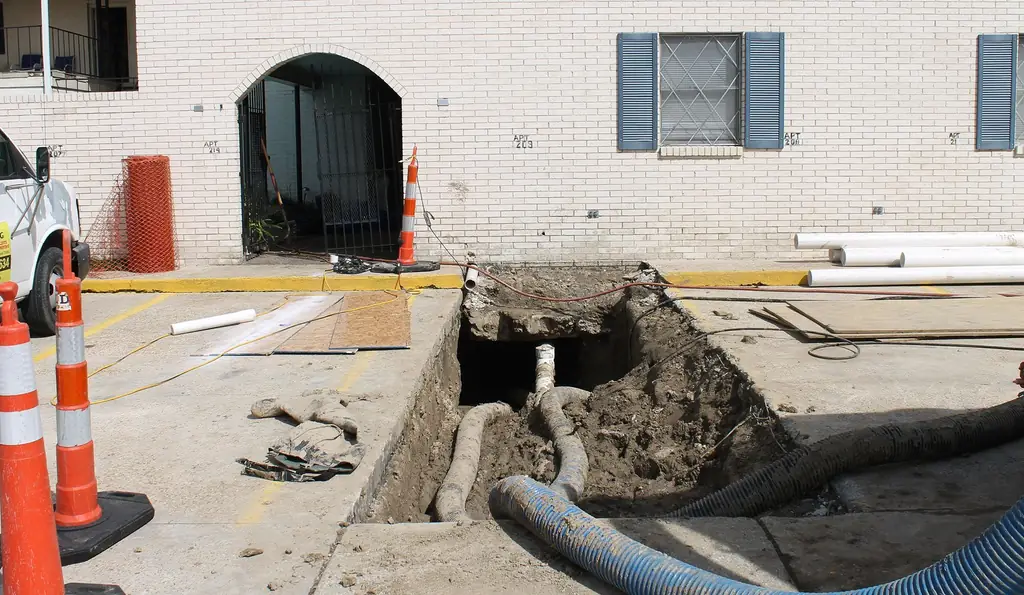
Most homes in Kenner, Metairie and New Orleans sit on a concrete slab, and the water lines that feed the house often run underneath it. When one of those lines springs a leak, you can't see it. There's no drip under the sink and no stain on the ceiling. The water just disappears into the ground, and the first thing you notice is usually something small that feels off. Here's what to watch for, and what actually happens when we come out to find the leak and fix it.
Your water bill climbs and nothing changed
A bill that jumps when nobody changed how they use water is the most common first clue. No new pool, no hose running all day, and the number is still higher. A line leaking day and night under the slab will do exactly that, because the meter counts every gallon whether you used it or not.
You can run a quick test yourself. Shut off every faucet, the dishwasher, the washing machine and the ice maker, then go look at your water meter. If the dial is still turning or the little triangle is still spinning, water is going somewhere. If you've checked the toilets and the outside spigots and found nothing, the leak is likely somewhere you can't see.
Warm spots, damp floors and the sound of running water
Hot water lines give themselves away best. When a hot line leaks under the slab, the concrete above it can feel warm under bare feet, sometimes in a patch about the size of a doormat. Walk through the house barefoot and pay attention to tile or laminate that feels warmer than the rest of the room.
Then listen. Late at night, when the house is quiet and every fixture is off, stand in the hallway for a minute. A faint hiss or trickle means water is moving through a pipe that has a hole in it. A few other things to look for:
- Flooring that lifts, buckles or feels spongy in one area
- Baseboards that swell or carpet that smells musty with no obvious source
- Water seeping up at the edge of the slab when it hasn't rained
- Low water pressure at a fixture that used to run strong
- A water heater that runs more than it should
Cracks and shifting that point to a problem
A crack in a slab doesn't mean you have a leak. Concrete cracks, and the soil down here moves as it goes from soaked to dry and back again. But a new crack that shows up alongside any of the signs above deserves a closer look. A leaking line can wash soil out from under the slab and let it settle, and that settling is what opens cracks, sticks doors and lifts tile.
The combination matters more than any single sign. A sticking door by itself is a door. A sticking door, a bigger water bill and a warm spot in the hall is a pattern, and the pattern is worth a phone call.
How an underslab leak gets found
Guessing doesn't work here. Neither does jackhammering a square in the middle of your living room and hoping you picked the right spot. We carry the leak detection equipment to locate an underslab leak, and our licensed technicians use it to pinpoint where the problem is before anything gets cut or dug.
Finding the exact spot is half the job. It decides how much has to be opened up and how much of your house stays exactly as you left it. When the trouble is in a drain line instead of a supply line, a video line inspection lets us look inside the pipe and see what's going on.
Fixing it without tearing out your floor
The old way to fix a slab leak was to break through the concrete from inside the house. That means pulling up flooring, running a jackhammer, living in dust and putting everything back afterward. We use hydro-tunneling instead. It uses water to open a tunnel through the soil beneath the slab, so we can reach the pipe from outside or through a small access point and make the repair underneath. Your floors, your furniture and your daily routine stay where they are.
Depending on what we find, we repair the bad section or replace old lines altogether, including old, cracked Orangeburg water and sewer pipe. If you want the full picture of how we handle these jobs, read our underslab plumbing repairs page.
The warranty, and why to call sooner
We offer a lifetime warranty on underslab repairs. A repair under your house should be one you never have to think about again. Mark Peterson, a Louisiana Master Plumber, is on every job, and we've been family and locally owned since 1979.
A slab leak never gets smaller on its own. Water keeps washing soil away, and the longer it runs the more it can cost you in damage. Estimates are free and same-day, and we take emergency calls 24 hours a day, 7 days a week, from Houma and Thibodaux up through Kenner and New Orleans. If your bill, your floor or your ears are telling you something is wrong, call us at (504) 461-5193.
Peterson Plumbing & Sand Pumping, (504) 461-5193
Call (504) 461-5193More articles
Orangeburg and Cast Iron Sewer Lines in Older New Orleans Homes
If your house is older, the sewer line under it may be a material that was never meant to last this long.
Sand Pumping Explained: What Voids Under Your House Really Mean
If your floors feel soft or your house is settling, the problem may be empty space where solid ground used to be.